
As briefly discussed in a Youtube video last week, sharing fake news has become more and more common since the global outbreak of COVID-19 (Coronavirus).
Over the past 24 hours I have been sent, and have seen on social media, three fake pieces of communication. Although some people may think “what’s the harm, you never know”, or “just to be safe, I will share”, there is harm, and it is not safe sharing fake content – it blocks the truth, it creates panic, it sends out false or misleading information, and often it further entrenches division in society. It is also potentially a criminal offence!
Now is the time to stand together – we must be responsible with what we share. As a default position, assume everything you receive on WhatsApp or see on social media is fake until you have confirmed it via an official channel (or unless it is from a reputable source). Ignore the scare-mongering voice note from some expert who claims to have an inside track; ignore the message that seeks to gain attention and sow division. Rather, obtain your information and news from an official source – the government, a NPC, a global institution, or some credible media outlet; rather ignore Dan from Facebook or Sandile from WhatsApp for the next 21 days.
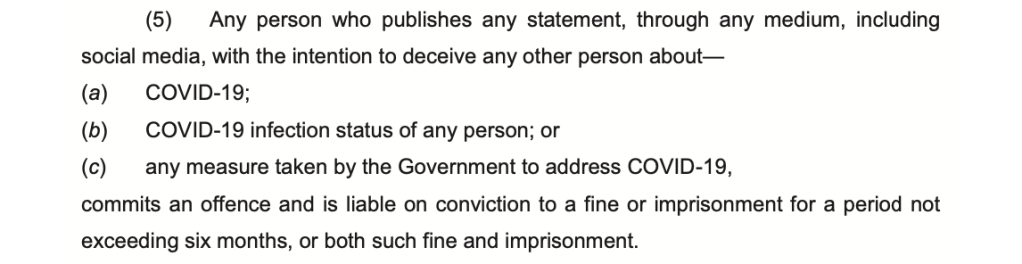
If using your common sense is not enough to stop you sharing fake news, remember this – it could be a criminal offence. In terms of the recently released regulations to the Disaster Management Act, regulation 11(5) criminalises sharing fake news. The wording of the regulation requires intention, so arguably Dan from Facebook could argue he was ignorant and did not have intention to deceive. But, remembering the Oscar Pistorius case, in criminal law in South Africa, the concept of dolus eventualis may mean that a person who shares something with a reckless disregard for the truth is found to have intention – if that person accepts the possibility that the information he or she is sharing is fake. Therefore, even if a person shares something and thinks they may be helping, in theory, they may still be found liable. Clearly, the main targets of this regulation are the creators of the fake news, but sharing it exacerbates the problem and entrenches false and misleading information (which does cause harm – it prevents the truth from being known and potentially causes poor decisions to be made; it usually also stirs up tensions in society).
Be careful! Do not share anything that is not verified, especially if from an unknown source on WhatsApp, Twitter or Facebook – share only credible information.
The applicable regulation reads as follows:
 Law Blog